The science behind swimming technique: hydrodynamics and drag, propulsion and Newton’s third law, buoyancy, stroke biomechanics and mental focus.
Wednesday, November 11, 2026
Just in

 Stacey
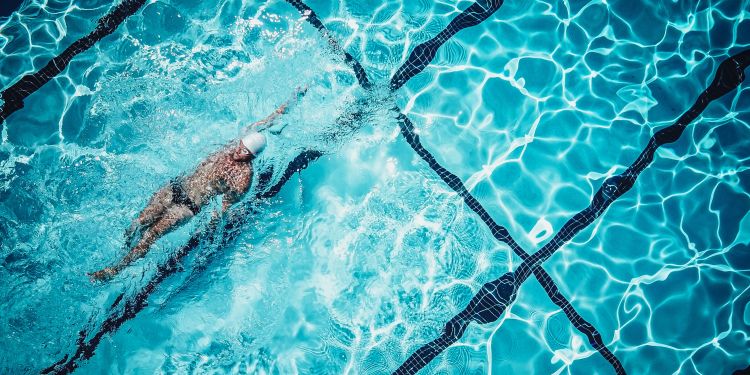
Swimming is both an art and a science, requiring precise movements, fluid mechanics, and human physiology to achieve peak performance. Understanding the science behind swimming techniques can help athletes refine their strokes, reduce drag, and increase speed. In this article, we’ll explore the key scientific principles that make swimming efficient and effective.
Water resistance, or drag, is a major force that swimmers must overcome. The key to reducing drag lies in proper body positioning and streamlining. Swimmers achieve this by keeping their bodies as flat and elongated as possible, reducing surface area and minimizing turbulence.
Newton’s Third Law states that for every action, there is an equal and opposite reaction. In swimming, propulsion occurs when swimmers push against the water, generating forward motion.
Buoyancy determines how well a swimmer floats in water. The human body naturally has buoyant properties, but muscle mass, fat distribution, and lung capacity influence flotation.
Each swimming stroke—freestyle, backstroke, breaststroke, and butterfly—relies on different biomechanical techniques to optimize efficiency.
Mental training is just as crucial as physical preparation. Elite swimmers use visualization, mindfulness, and goal-setting to enhance performance.
Swimming is a highly technical sport that blends physics, biomechanics, and psychology. By understanding hydrodynamics, propulsion mechanics, buoyancy, and stroke biomechanics, swimmers can optimize their performance in the water. Whether you’re a beginner or an elite athlete, applying these scientific principles can help you become a faster, more efficient swimmer.