How AI Mock Interviews Are Transforming Job Preparation
Key Takeaways
- AI mock interviews provide realistic simulations that adapt to individual responses and offer real-time feedback.
- These tools help reduce interview anxiety by familiarizing candidates with potential questions and scenarios.
- AI-driven platforms are accessible and cost-effective, making quality interview preparation available to a broader audience.
Table of Contents
- Introduction
- Limitations of Traditional Interview Preparation
- The Rise of AI in Interview Prep
- Benefits of AI Mock Interviews
- Real-World Applications
- Choosing the Right AI Mock Interview Platform
- The Future of AI Mock Interviews
- Conclusion
Artificial Intelligence (AI) is transforming how job seekers prepare for interviews by delivering personalized, data-driven practice that adapts to individual strengths and weaknesses. These advanced tools simulate real interview scenarios, provide instant feedback, and highlight areas for improvement, allowing candidates to build confidence and sharpen their responses. Platforms like Cook’d AI offer tailored mock interview experiences, enabling users to practice strategically, refine communication skills, and improve overall performance in competitive hiring environments.
Introduction
Preparing for job interviews has traditionally involved rehearsing common questions, seeking advice from mentors, and participating in mock interviews with peers. While these methods have their merits, they often lack personalization and fail to replicate the dynamic nature of real interviews. Enter AI mock interviews, a game-changer in the realm of job preparation. Platforms like Cook’d AI offer tailored mock interview experiences, helping candidates refine their skills effectively.
Limitations of Traditional Interview Preparation
Conventional interview preparation methods can be time-consuming and may not provide the nuanced feedback necessary for improvement. Additionally, coordinating mock interviews with others can be challenging, and the feedback received might be subjective or inconsistent. Traditional methods often fail to simulate the high-pressure environment of actual interviews, leaving candidates unprepared for the real experience.
Another key limitation is the lack of diversity in interview questions and scenarios. Most practice interviews are limited by peers’ or mentors’ knowledge and experience, which can miss industry-specific nuances, current trends, or company-specific questions. As a result, candidates don’t receive the comprehensive preparation needed to navigate today’s highly competitive hiring landscape.
The Rise of AI in Interview Prep
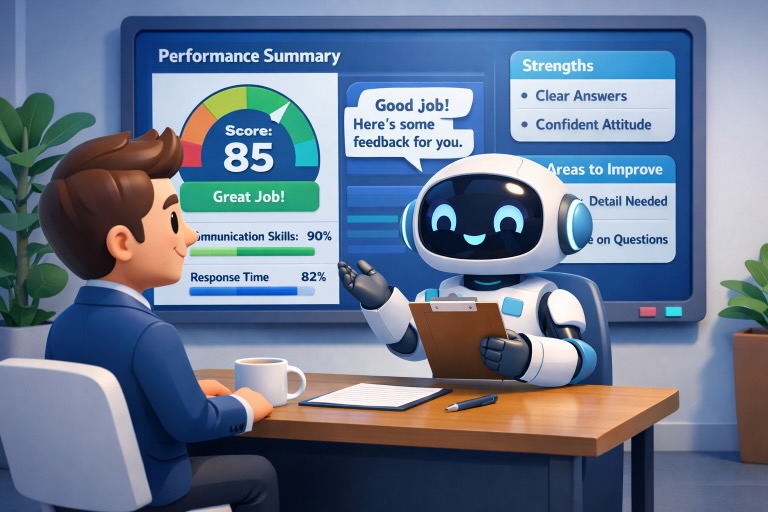
AI-powered mock interviews utilize machine learning algorithms to simulate real interview scenarios. These platforms analyze a candidate’s responses, tone, and body language, offering constructive feedback to enhance performance. For instance, Cook’d AI provides tailored mock interview experiences that help candidates refine their skills.
AI platforms are constantly evolving, using vast datasets from thousands of real interview transcripts to stay up to date with the latest interview trends, keywords, and evaluation criteria used by top companies. By analyzing patterns in successful responses, AI tools can provide granular feedback that adapts to a candidate’s progress, highlighting both strengths and areas for improvement after each session.
Benefits of AI Mock Interviews
- Personalized Feedback: AI systems assess individual performance and provide specific recommendations for improvement.
- Accessibility: Candidates can practice anytime, eliminating the need to coordinate with others.
- Cost-Effective: Many AI platforms offer affordable or free services, making quality preparation accessible to all.
- Realistic Simulations: AI can mimic various interview styles and questions, preparing candidates for a range of scenarios.
Additionally, AI-driven platforms collect metrics on response time, confidence, and even nonverbal cues in some advanced systems. This comprehensive data helps candidates identify patterns in their performance, such as hesitations or filler words, and receive detailed coaching on how to project clarity and self-assurance. Enhanced tracking and analytics allow users to see their progress over time, making preparation more effective and goal-oriented.
Real-World Applications
Companies are increasingly integrating AI into their hiring processes. For example, Meta has been testing AI-enabled coding interviews, allowing candidates to use AI tools during the process. This approach aims to align interview conditions with real-world development environments where AI tools are commonly used.
In addition, universities and career centers are beginning to adopt AI mock interview tools as part of their career development programs. By offering AI-powered practice sessions, these institutions give students and job seekers access to modern preparation techniques and improve their employability in rapidly evolving job markets. Some organizations also use AI mock interviews to pre-screen candidates, ensuring only the most prepared individuals proceed to live interviews.
Choosing the Right AI Mock Interview Platform
When selecting an AI mock interview platform, consider the following factors:
- Relevance: Ensure the platform offers practice for your specific industry or role.
- Feedback Quality: Look for platforms that provide detailed, actionable feedback.
- User Experience: A user-friendly interface can enhance the learning experience.
- Reputation: Research reviews and testimonials to gauge the platform’s effectiveness.
It is also important to consider the platform’s privacy policies and how your data will be used. Some AI tools record and analyze audio or video responses, so make sure to choose a solution that respects user privacy and offers secure data handling. Finally, check if the platform supports integration with other career tools or offers certifications and reports that can be shared with potential employers or career coaches.
The Future of AI Mock Interviews
The evolution of AI-based mock interviews is only just beginning. In the future, we can expect systems to leverage augmented reality (AR) and virtual reality (VR) to create even more immersive and realistic interview simulations. Imagine interacting with a virtual panel of interviewers in a simulated office environment, or practicing interviews in different languages and cultural contexts using advanced language models.
Furthermore, as AI becomes more attuned to soft skills, such as emotional intelligence, adaptability, and leadership, candidates will receive deeper, more holistic feedback, helping them prepare for behavioral and scenario-based interview questions that are becoming increasingly important in hiring processes. AI may also provide real-time coaching during live interviews, offering subtle cues or questions to help candidates perform their best.
With continuous advancements, AI-driven mock interviews have the potential to level the playing field for all job seekers, making high-quality preparation accessible and effective, regardless of location or background.
Conclusion
AI mock interviews are transforming job preparation by offering personalized, accessible, and effective practice sessions. As the job market becomes increasingly competitive, leveraging AI tools can give candidates a significant advantage, ensuring they are well-prepared to excel in interviews.