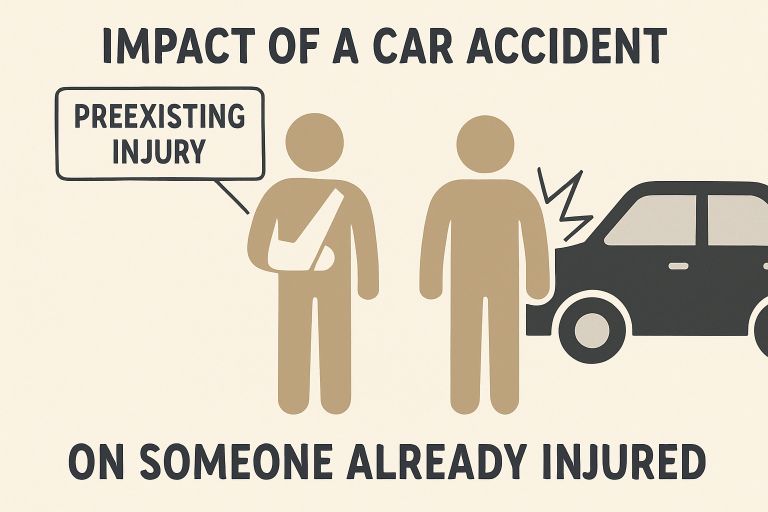
How Preexisting Injuries Affect Car Accident Claims in Nevada
Key Takeaways
- Preexisting conditions can significantly impact the outcome of car accident claims in Nevada.
- The Eggshell Plaintiff rule protects injured individuals with prior health issues.
- Thorough medical documentation and expert testimony are crucial to proving injury aggravation.
- Insurance companies often challenge claims involving preexisting injuries, and legal guidance is vital.
- Nevada’s comparative negligence laws and statute of limitations play key roles in resolving claims.
Table of Contents
- Understanding Preexisting Conditions in Personal Injury Cases
- The Eggshell Plaintiff Rule
- Proving Aggravation of Preexisting Conditions
- Challenges from Insurance Companies
- Nevada’s Comparative Negligence Law
- Statute of Limitations
- Seeking Legal Assistance
- Conclusion
Understanding Preexisting Conditions in Personal Injury Cases
Preexisting conditions are health issues, such as chronic back pain, previously healed fractures, or arthritis, that were present before a car accident occurred. In Nevada, these conditions are highly relevant in personal injury claims, as they can directly affect the amount of compensation a victim may receive. Individuals with preexisting injuries may worry that their claims will be diminished or dismissed because of their medical history. However, the law seeks to ensure fairness and a responsible review of how the accident worsened their condition.
Car accident victims often wonder how much their previous medical history will influence the outcomes of their cases. For anyone navigating this process, consulting with experienced legal professionals, such as those found here: https://injuryfirm.vegas/las-vegas-personal-injury-lawyer/, can make a significant difference. These experts understand the complexities of Nevada’s personal injury laws and how preexisting conditions affect each claim.
Proving the intersection between preexisting injuries and new traumas requires careful strategy and documentation. Without the proper approach, insurance adjusters may attempt to minimize a claim’s value or deny compensation entirely. Understanding the dynamics at play and what protections are in place under state law can empower injured parties and safeguard their rights to fair compensation.
If your prior injury was stable or only mildly symptomatic before the collision, you are still entitled to seek compensation for any worsening caused by the accident. It is important to remember that the law does not hold individuals responsible for the way they were before, but rather for the harm caused by the other party’s actions. For a broad overview of how preexisting conditions intersect with personal injury law nationally, Nolo’s guide on preexisting injuries in personal injury claims offers valuable insight.
Nevada law adopts the Eggshell Plaintiff rule, a critical doctrine that protects people with preexisting conditions who are injured in car accidents. The rule requires defendants to accept their victims as they are found, regardless of any heightened vulnerability or previous medical issues. If the collision leads to the aggravation of a preexisting injury, the at-fault driver is responsible for the entire extent of the new or worsened harm, even if a healthy person might not have sustained the same injury.
This rule is fundamental because it prevents insurance companies and defendants from using a victim’s medical past as an excuse to avoid liability. Individuals who suffer severe consequences from relatively minor accidents due to fragile health still maintain their rights to full compensation.
Proving Aggravation of Preexisting Conditions
To make a successful claim for the worsening of a preexisting injury, comprehensive proof is essential. Plaintiffs benefit from organizing and presenting the following:
- Medical Records: Collect all relevant records from before and after the accident. These documents should clearly show the baseline condition and how the accident has changed your health, making it easier to illustrate the difference.
- Expert Testimony: Medical professionals can serve as authoritative voices, explaining the medical science behind the aggravation and why the current symptoms differ from pre-accident complaints.
- Personal Testimony: Fact-based descriptions of daily challenges, pain, or limitations that have developed since the incident help to paint a vivid picture of the injury’s severity.
Consistency across various sources of evidence enhances the persuasiveness of demonstrating the link between the accident and the aggravation of a preexisting condition. Reliable witnesses and timely medical care will also strengthen a claim.
Challenges from Insurance Companies
Insurance adjusters commonly try to limit or deny claims involving preexisting conditions. They may assert that the symptoms or limitations were present before the crash and that the accident did not meaningfully contribute to the injury. For this reason, clear evidence and experienced legal representation are critical to countering these tactics.
When facing insurance company resistance, being diligent about gathering documentation, such as updated medical evaluations and notes from treating doctors, can tip the scales. Providing evidence of change in your condition and demonstrating the accident’s role in your health decline is key. For guidance on handling these challenges, Consumer Reports offers helpful advice on insurance claim disputes and consumer rights.
Nevada’s Comparative Negligence Law
Nevada uses a modified comparative negligence model when apportioning fault after an accident. If an injured person is less than 50 percent responsible for the accident, they remain eligible for compensation, though their overall award will be reduced in proportion to their responsibility. This rule also applies to cases with preexisting injuries, where insurance companies might attempt to argue that a plaintiff’s previous health conditions, or actions related to their care, make them more at fault for their current state.
The percentage assigned to each party’s fault can be a subject of intense negotiation and litigation, so understanding this law is essential. Injured individuals should never assume that they are ineligible for recovery solely due to their medical history or the complexity of their case.
Statute of Limitations
People injured in Nevada car accidents have two years from the date of the accident to file a personal injury lawsuit. This statute of limitations is strictly enforced, and missing the deadline almost always forfeits your right to compensation, no matter how compelling your case may be. Individuals with preexisting conditions who need more time to gather medical records or coordinate specialist evaluations must pay close attention to this crucial legal deadline.
Seeking Legal Assistance
Claims involving preexisting injuries often require a sophisticated legal strategy and expert witness testimony. An experienced personal injury attorney can help you gather the necessary documentation and present a compelling case to insurance adjusters or a jury. Attorneys also negotiate with insurers to prevent them from devaluing your claim based on your prior medical history.
Connecting with legal counsel as early as possible increases your chances of success and maximizes potential compensation for both new and aggravated injuries.
Conclusion
Navigating a car accident claim in Nevada when you have a preexisting injury may seem daunting, but the state’s laws are designed to preserve fairness for all parties. By understanding and asserting your rights under the Eggshell Plaintiff rule and Nevada’s comparative negligence law, you can ensure your unique medical history does not become a barrier to justice. Organize your medical evidence, act promptly within the statute of limitations, and seek experienced legal support to secure the compensation you rightfully deserve.